
Last Updated on June 18, 2026 by I Love Spanish Club
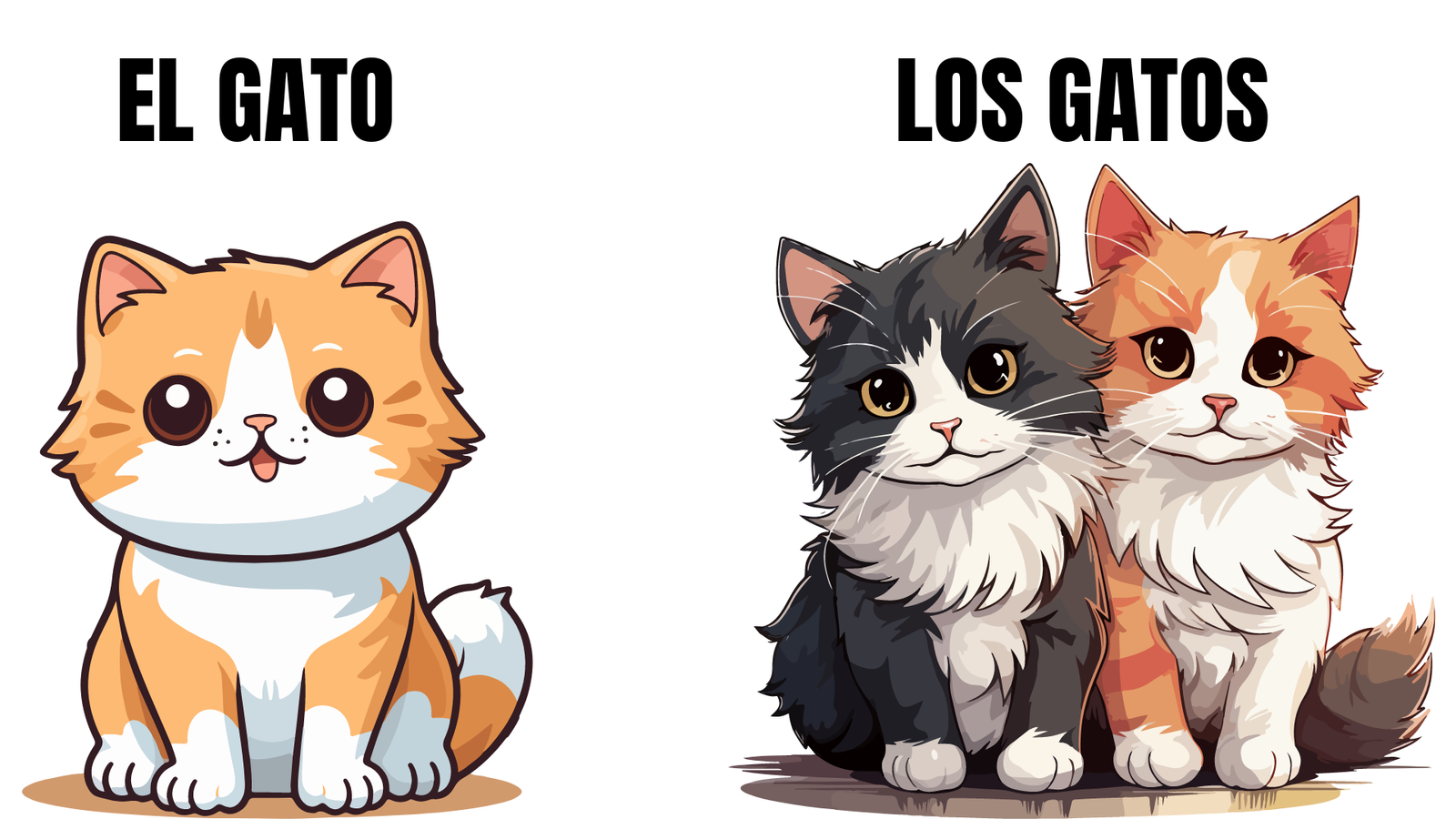
Articles are some of the smallest words in Spanish — but they carry a lot of information. Every time you say el, la, un, una, you’re telling the listener whether a noun is masculine or feminine, specific or general. In this complete guide you’ll learn all Spanish articles, when to use each one, the rules with gender and plural, important exceptions, and practice exercises. ¡Vamos!
🔑 Key Takeaways
✅ Spanish has 4 definite articles (the): el / la / los / las
✅ Spanish has 4 indefinite articles (a / some): un / una / unos / unas
✅ Articles agree in gender and number with the noun
✅ De + el always contracts to del. A + el always contracts to al
📋 Complete Articles Chart
| Masculine Singular | Feminine Singular | Masculine Plural | Feminine Plural | |
|---|---|---|---|---|
| Definite (the) | el libro | la casa | los libros | las casas |
| Indefinite (a/some) | un libro | una casa | unos libros | unas casas |
🔵 Definite Articles — El, La, Los, Las (The)
Use definite articles when referring to a specific noun — something both speaker and listener know about:
| El niño está en el colegio. | The boy is at school. |
| La película fue increíble. | The movie was incredible. |
| Los libros están en la mesa. | The books are on the table. |
| Me gusta el café. | I like coffee. (general preference — Spanish uses definite article here!) |
💡 Important difference from English: Spanish uses definite articles with general likes/dislikes and abstract concepts where English uses no article. Me gusta el café (I like coffee), el amor es importante (love is important).
🟠 Indefinite Articles — Un, Una, Unos, Unas (A / Some)
Use indefinite articles when referring to a non-specific noun — something new to the conversation or not specifically identified:
| Tengo un libro muy bueno. | I have a very good book. |
| Necesito una silla. | I need a chair. |
| Hay unos estudiantes en el pasillo. | There are some students in the hallway. |
| Quiero unas manzanas. | I want some apples. |
⚡ The Contractions: AL and DEL
Two mandatory contractions you must always use:
| Rule | ❌ Wrong | ✅ Correct |
|---|---|---|
| a + el → al | Voy a el banco | Voy al banco. |
| de + el → del | El libro de el estudiante | El libro del estudiante. |
💡 This ONLY applies to el (masculine singular). No contraction with la, los, las: la película de la actriz (no contraction).
🔍 Special Cases and Exceptions
Feminine nouns starting with stressed “a-” use EL
To avoid two vowel sounds colliding, feminine nouns starting with a stressed a- or ha- use el in singular — but are still feminine (adjectives are feminine, plural uses las):
| el agua fría (the cold water) | → las aguas frías (plural) |
| el aula vacía (the empty classroom) | → las aulas vacías (plural) |
| el hacha (the axe) | → las hachas (plural) |
When NOT to use an article
| After ser — profession (without adjective) | Soy médica. (not ~~soy una médica~~) |
| With days of the week after ser | Hoy es lunes. (not ~~es el lunes~~) |
| With languages after hablar | Hablo español. (often no article needed) |
💬 Real Conversation Example
📍 Articles in natural dialogue
María: ¿Quieres ir al cine esta noche?
Do you want to go to the cinema tonight?
Tom: Sí, ¿qué película dan?
Yes, what movie is showing?
María: Hay una película nueva del director de esa serie que te encanta.
There’s a new movie from the director of that series you love.
Tom: ¡Me encantan las películas de ese director! Vamos.
I love movies by that director! Let’s go.
Notice: al cine (contraction), una película nueva (indefinite — it’s new info), del director (contraction), las películas (definite — we’re talking about a category). Articles are constantly working in the background of every sentence. A native tutor on Italki can correct your article usage in real time, which is the fastest way to make them feel natural rather than something you have to consciously think about.
⚠️ Common Mistakes English Speakers Make
❌ Forgetting the contraction al / del
❌ ~~Voy a el mercado.~~ → ✅ Voy al mercado.
❌ ~~El perro de el vecino~~ → ✅ El perro del vecino.
❌ Omitting the article in general statements
❌ ~~Me gusta café.~~ → ✅ Me gusta el café. Spanish requires the definite article for general preferences — unlike English!
❌ Using an article before a profession after ser
❌ ~~Soy un médico.~~ → ✅ Soy médico. No article after ser with professions — unless you add an adjective: Soy un buen médico.
🎮 Let’s Practice!
Test your knowledge of Spanish articles:
❓ Frequently Asked Questions
Why does Spanish use “el agua” if “agua” is feminine?
It’s a phonetic rule — when a feminine noun starts with a stressed a- sound, Spanish uses el to avoid two “a” sounds clashing: la agua → el agua. The noun is still grammatically feminine, which is why adjectives are feminine (el agua fría) and the plural uses las (las aguas).
What’s the difference between “un libro” and “el libro”?
Un libro = a book (indefinite — you’re introducing it for the first time or it could be any book). El libro = the book (definite — both speaker and listener know which specific book). This is the same as “a” vs “the” in English.
How can I get better at using articles naturally?
Articles are one of those things you learn best through exposure — hearing them constantly in natural speech. Watching Spanish shows on LingoPie with interactive subtitles lets you see articles used in context hundreds of times per episode, which builds the intuition that grammar rules alone can’t provide.