
Last Updated on June 22, 2026 by I Love Spanish Club
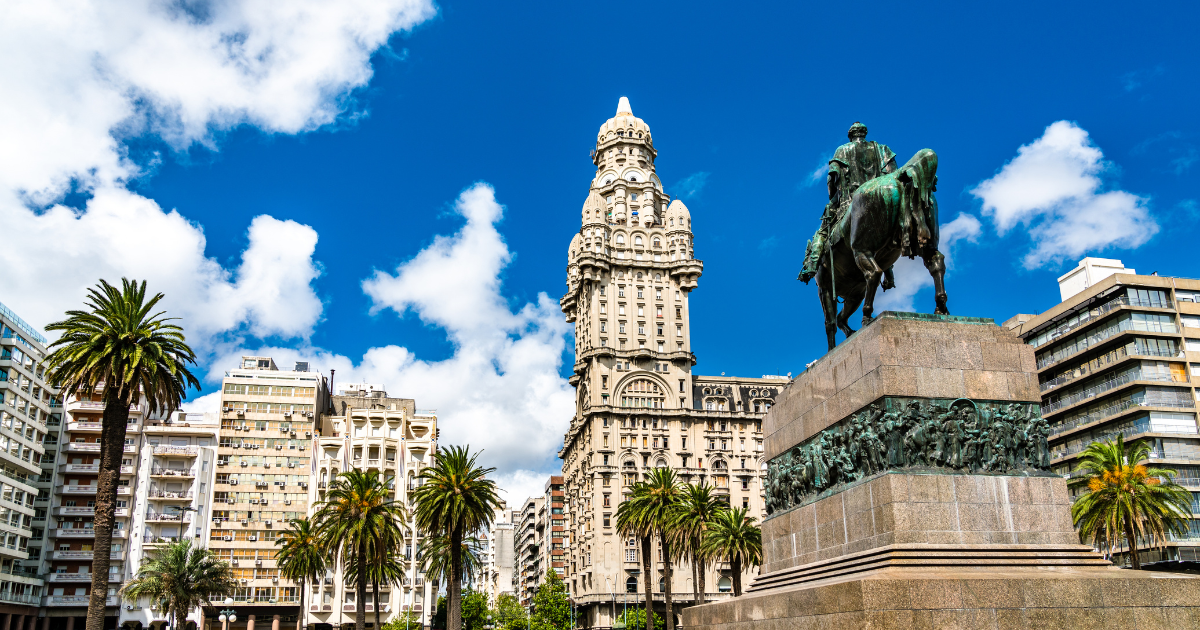
Uruguay is one of South America’s most progressive, stable, and welcoming countries — a small nation between Argentina and Brazil that punches well above its weight in terms of quality of life, culture, and travel experiences. From the cosmopolitan boulevards of Montevideo to the glamorous beaches of Punta del Este, the UNESCO colonial streets of Colonia del Sacramento, and the wild natural beauty of the Río Uruguay, Uruguay is a destination that surprises and delights every visitor. In this guide you’ll discover the best places to visit in Uruguay. ¡Uruguay, el país más progresista de América Latina! (Uruguay, the most progressive country in Latin America!)
🇺🇾 Quick Facts About Uruguay
| Fact | Detail |
|---|---|
| Capital | Montevideo |
| Official language | Spanish |
| Population | 3.5 million |
| Area | 176,215 km² (2nd smallest in South America) |
| Currency | Uruguayan Peso (UYU) |
| Best time to visit | December–March (Southern Hemisphere summer) |
| Known for | Tango, yerba mate, beef, Punta del Este, Colonia del Sacramento, progressive policies |
🏙️ 1. Montevideo — South America’s Most Liveable City
Montevideo is one of South America’s most underrated capitals — a sophisticated, cosmopolitan city consistently ranked as the best city to live in Latin America. The historic Ciudad Vieja (Old City) is filled with art deco architecture, fascinating museums, and excellent restaurants serving Uruguay’s legendary beef. The magnificent Rambla — an 18km coastal promenade along the Río de la Plata — is the heart of Montevideo’s social life, perfect for walking, cycling, and watching the sunset over the estuary. The Mercado del Puerto is a carnivore’s paradise — an 1868 iron market building now housing some of the finest parrillas (steakhouses) in Uruguay, with the smell of grilling meat filling the air. Don’t miss the Carnaval de Montevideo — the longest carnival in the world, lasting 40 days!
⛪ 2. Colonia del Sacramento — A UNESCO Colonial Jewel
Colonia del Sacramento is one of the most enchanting towns in all of South America — a beautifully preserved Portuguese colonial settlement founded in 1680 on a small peninsula jutting into the Río de la Plata, directly opposite Buenos Aires. The historic quarter is a UNESCO World Heritage Site of extraordinary charm, with cobblestone streets, colonial ruins, colorful houses, ancient city walls, and a romantic lighthouse. The town is small enough to explore entirely on foot in a day — and the views across the wide estuary toward Argentina are stunning, especially at sunset. It’s easily accessible by ferry from Buenos Aires, making it one of the most popular day trips in the region.
🏖️ 3. Punta del Este — South America’s St. Tropez
Punta del Este is one of South America’s most glamorous and fashionable resort destinations — a stunning peninsula on Uruguay’s Atlantic coast where the river meets the ocean, lined with beautiful beaches, luxury hotels, world-class restaurants, and a nightlife that draws the jet set from Buenos Aires, São Paulo, and beyond every summer. Playa Brava (wild Atlantic waves) and Playa Mansa (calm, protected waters) offer two completely different beach experiences on either side of the peninsula. The iconic “La Mano” sculpture — a giant hand emerging from the sand — is one of Uruguay’s most photographed landmarks. Beyond the glamour, the nearby Casapueblo — a whitewashed artist’s village built by Uruguayan artist Carlos Páez Vilaró into the clifftops — is one of the most unique architectural experiences in South America.
🌊 4. Río Uruguay — Nature, Fishing & Thermal Springs
The Río Uruguay forms the entire western border of the country, separating Uruguay from Argentina along 500km of river. The riverside towns along this route offer a completely different, more authentic Uruguay far from the tourist circuits — verdant rolling countryside, colonial estancias, thermal springs (termas), and excellent fishing. The town of Salto is famous for its spectacular thermal baths, while Fray Bentos has a fascinating industrial heritage museum in the historic meat-packing plant (UNESCO World Heritage Site). The river itself is perfect for fishing, kayaking, sailing, and simply enjoying Uruguay’s extraordinarily peaceful natural landscapes.
🌟 More Reasons to Visit Uruguay
| Experience | Where |
|---|---|
| 🥩 World’s best beef | Everywhere — Uruguay is one of the world’s top beef producers |
| 🎭 Carnaval de Montevideo | Montevideo — world’s longest carnival (40 days!) |
| 💃 Tango & candombe | Montevideo — UNESCO Intangible Heritage |
| 🏇 Gaucho culture | Interior estancias — horseback riding, asado |
| 🌿 Eco-tourism | Quebrada de los Cuervos, Rocha department |
| 🐳 Whale watching | Cabo Polonio — Southern right whales, July–November |
| ♨️ Thermal springs | Salto, Daymán — some of South America’s finest termas |
🗣️ Useful Spanish Phrases for Uruguay
¿Me convidás un mate?
Would you share a mate with me? (Uruguayan way of asking!)
¿Cómo llego a Colonia del Sacramento desde Buenos Aires?
How do I get to Colonia del Sacramento from Buenos Aires?
¿Dónde está el mejor asado de Montevideo?
Where is the best barbecue in Montevideo?
¿Cuándo empieza el Carnaval de Montevideo?
When does the Montevideo Carnival start?
¡Uruguay es un país tranquilo y hermoso!
Uruguay is a peaceful and beautiful country!
¿Hay termas cerca de Salto?
Are there thermal springs near Salto?