
Last Updated on June 30, 2026 by I Love Spanish Club
Whether you’re grocery shopping in a Spanish-speaking country, following a recipe in Spanish, or simply building your food vocabulary — knowing dairy products in Spanish is incredibly practical. In this guide you’ll find 90+ dairy words organized by category, example sentences, and cultural notes about how dairy is used across the Spanish-speaking world.
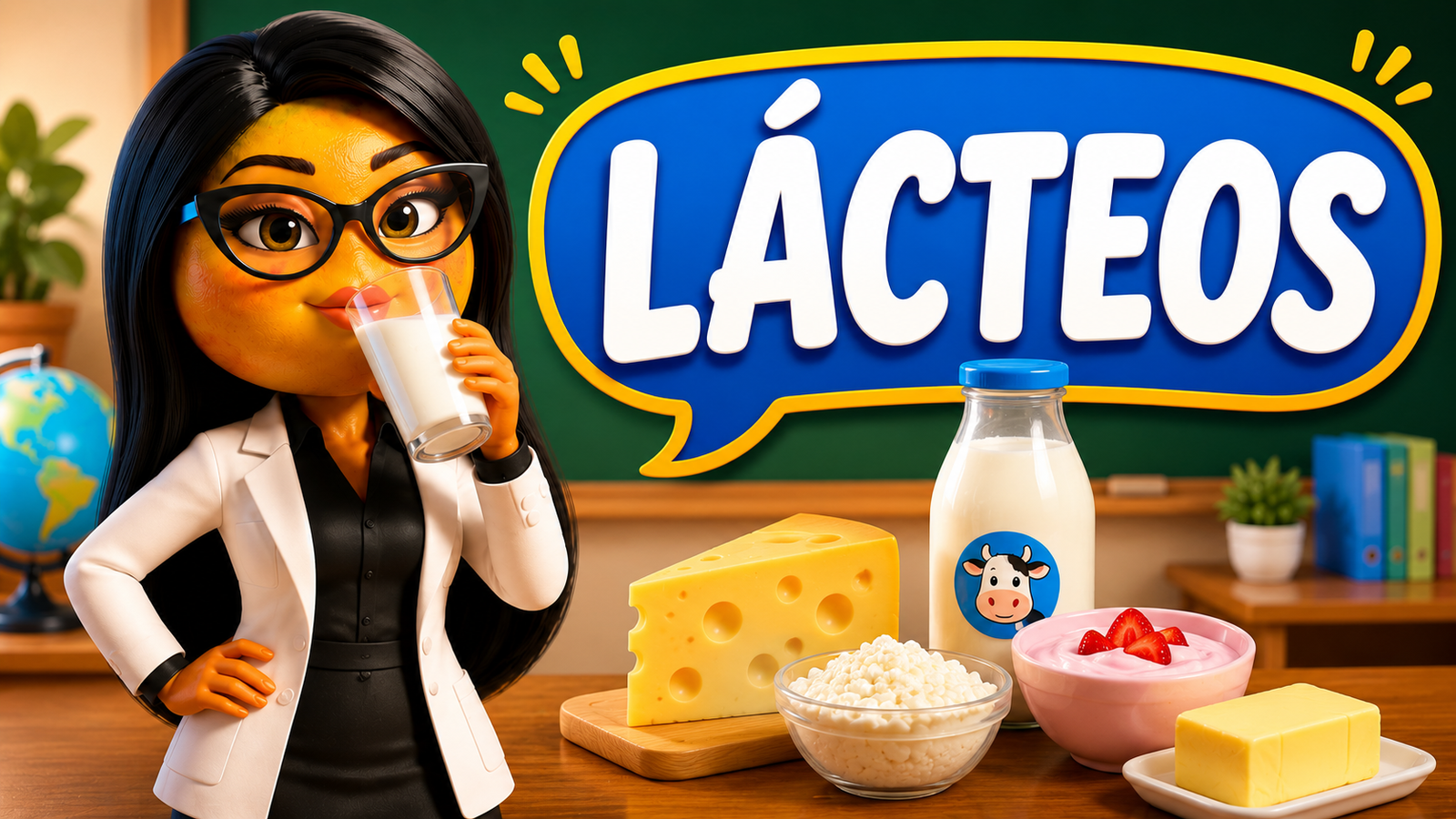
🥛 How Do You Say “Dairy Products” in Spanish?
Los productos lácteos
los pro-DUK-tos LAK-teh-os
Lácteo comes from lactis (Latin for milk) — the same root as “lactose” in English. Any product derived from milk is a producto lácteo.
🥛 Types of Milk in Spanish — Los Tipos de Leche
| Spanish | English |
|---|---|
| Leche entera | Whole milk |
| Leche desnatada / descremada | Skim milk |
| Leche semidesnatada | Semi-skimmed milk |
| Leche condensada | Condensed milk |
| Leche evaporada | Evaporated milk |
| Leche en polvo | Powdered milk |
| Leche sin lactosa | Lactose-free milk |
| Leche de cabra | Goat milk |
| Leche de oveja | Sheep milk |
| Leche achocolatada | Chocolate milk |
| Leche UHT | UHT milk (ultra-high temperature) |
| Leche pasteurizada | Pasteurized milk |
🧀 Cheese in Spanish — El Queso
Spanish has a rich cheese culture — especially Spain, which produces dozens of regional varieties. Here are the most important cheese words to know:
| Spanish | English |
|---|---|
| Queso fresco | Fresh cheese |
| Queso curado | Aged cheese |
| Queso manchego | Manchego (famous Spanish sheep’s milk cheese) |
| Queso parmesano | Parmesan cheese |
| Queso mozzarella | Mozzarella cheese |
| Queso cheddar | Cheddar cheese |
| Queso azul | Blue cheese |
| Queso crema | Cream cheese |
| Queso de cabra | Goat cheese |
| Queso oaxaca | Oaxaca cheese (Mexican melting cheese) |
| Queso rallado | Grated cheese |
| Queso fundido | Melted cheese |
| Queso ahumado | Smoked cheese |
| Queso de untar | Spreadable cheese |
💡 Cultural note: Queso blanco (white fresh cheese) is a staple in Colombia, Venezuela and other Latin American countries — often eaten with arepas for breakfast. In Spain, queso manchego is the national pride. In Mexico, queso oaxaca is the go-to melting cheese for quesadillas. Understanding these regional differences will make your Spanish conversations about food much richer — and if you want to have those conversations in real time, a tutor from any of these countries on Italki would love to talk food with you.
🧈 Other Dairy Products in Spanish
| Spanish | English |
|---|---|
| Mantequilla | Butter |
| Mantequilla salada | Salted butter |
| Crema de leche | Heavy cream |
| Nata / Nata montada | Cream / Whipped cream (Spain) |
| Crema batida | Whipped cream (Latin America) |
| Crema agria | Sour cream |
| Yogur natural | Plain yogurt |
| Yogur griego | Greek yogurt |
| Yogur con frutas | Fruit yogurt |
| Helado | Ice cream |
| Requesón | Curd cheese / Ricotta-style |
| Suero de leche | Buttermilk / Whey |
| Kéfir | Kefir |
| Flan de leche | Milk flan |
| Natillas | Custard |
| Batido de leche | Milkshake |
💬 Real Conversation Examples
📍 At the supermarket
Cliente: Perdón, ¿dónde están los productos lácteos?
Excuse me, where are the dairy products?
Empleado: Al fondo a la izquierda. La leche está en el pasillo 5 y los quesos al lado.
At the back on the left. Milk is in aisle 5 and cheeses are next to it.
📍 Following a recipe
Receta: Agrega 200ml de crema de leche y una taza de queso rallado. Mezcla bien.
Add 200ml of heavy cream and a cup of grated cheese. Mix well.
Cocinero: ¿Puedo usar crema agria en vez de crema de leche?
Can I use sour cream instead of heavy cream?
🌎 Cultural Note: Dairy Across the Spanish-Speaking World
Dairy plays a very different role depending on where you are in the Spanish-speaking world:
🇨🇴 Colombia: Queso blanco fresco is eaten daily — often crumbled over soups, melted into arepas, or served with bocadillo (guava paste) as a snack. Leche con panela (milk with raw sugarcane) is a classic warm drink.
🇲🇽 Mexico: Crema mexicana is thinner and tangier than sour cream, and goes on almost everything — tacos, enchiladas, soups. Queso Oaxaca and queso fresco are kitchen staples.
🇪🇸 Spain: The dairy tradition is rich — from queso manchego (sheep’s milk) to natillas and flan. Spanish breakfasts often feature café con leche — a classic half-coffee, half-warm-milk combination.
If you’re planning to travel or live in a Spanish-speaking country, understanding these food differences is part of truly connecting with the culture. Learning these words through real native content — such as cooking shows or food vlogs on LingoPie — is one of the most enjoyable ways to absorb food vocabulary naturally.
🗣️ Useful Dairy Phrases in Spanish
| La leche está fría. | The milk is cold. |
| El queso manchego es de origen español. | Manchego cheese is of Spanish origin. |
| Prefiero la leche desnatada. | I prefer skimmed milk. |
| El queso parmesano es ideal para pasta. | Parmesan cheese is ideal for pasta. |
| La leche de cabra tiene un sabor más fuerte. | Goat milk has a stronger flavor. |
| Soy intolerante a la lactosa. | I’m lactose intolerant. |
| ¿Tienen queso sin lactosa? | Do you have lactose-free cheese? |
| El yogur griego es espeso y cremoso. | Greek yogurt is thick and creamy. |
✏️ Practice Exercise
Fill in the blank with the correct dairy product in Spanish:
- You want to make pizza. You need: _______ (mozzarella)
- Your coffee needs some: _______ (milk)
- The recipe says to add: _______ (heavy cream)
- You want dessert. You order: _______ (ice cream)
- You’re at a Spanish tapas bar and order: _______ (manchego cheese)
✅ Show Answers
- Queso mozzarella
- Leche
- Crema de leche
- Helado
- Queso manchego
❓ Frequently Asked Questions
What’s the difference between “nata” and “crema de leche”?
Both mean cream, but they’re used in different regions. Nata is the Spanish (Spain) word for cream. Crema de leche is more common in Latin America. They’re essentially the same product — just different regional vocabulary.
How do you say “lactose intolerant” in Spanish?
Soy intolerante a la lactosa — a very useful phrase if you’re traveling! You can also say soy alérgico/a a los lácteos (I’m allergic to dairy) for a more general dietary restriction.
Is “mantequilla” the same as “manteca”?
In Spain, mantequilla = butter. In Argentina, manteca is used for butter. In most of Latin America, manteca refers to lard or shortening. This is a classic regional variation that can cause confusion in recipes!
📚 Keep Learning
Let´s play