
Last Updated on August 12, 2026 by I Love Spanish Club
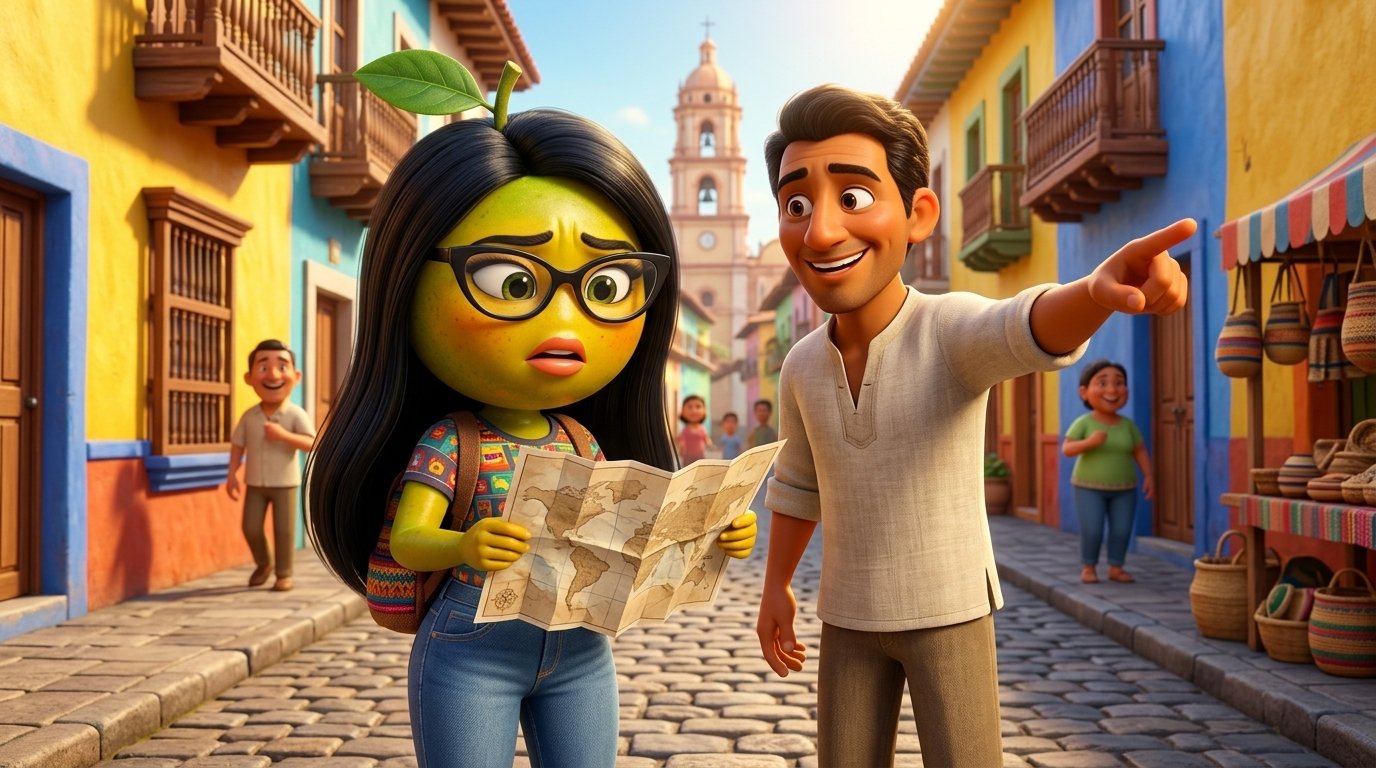
Getting lost is part of every travel adventure — but knowing how to ask for directions in Spanish can turn a stressful moment into a memorable conversation with a local. This guide covers everything you need: how to ask, how to understand the answer, key vocabulary for places and directions, and real dialogues you can use immediately. ¡No te pierdas! (Don’t get lost!)
🗣️ How to Stop Someone and Ask for Help
Before asking for directions, you need to get someone’s attention politely. In Spanish-speaking cultures, always greet first — jumping straight into a question without a greeting is considered rude.
| Spanish | English | Notes |
|---|---|---|
| Disculpe, ¿me puede ayudar? | Excuse me, can you help me? | Formal — use with strangers |
| Perdona, ¿me puedes ayudar? | Excuse me, can you help me? | Informal |
| Disculpe, estoy perdido/a. | Excuse me, I’m lost. | -o for men, -a for women |
| Buenos días, ¿me podría indicar…? | Good morning, could you tell me…? | Very polite, formal |
| Oiga, por favor… | Excuse me, please… | Getting attention formally |
| Oye, ¿sabes dónde está…? | Hey, do you know where … is? | Informal, with peers |
❓ Key Phrases for Asking Directions
| Spanish | English |
|---|---|
| ¿Dónde está…? | Where is…? |
| ¿Cómo llego a…? | How do I get to…? |
| ¿Me puede decir cómo llegar a…? | Can you tell me how to get to…? |
| ¿Queda lejos…? | Is … far? |
| ¿Está cerca de aquí? | Is it near here? |
| ¿Cuánto tiempo se tarda en llegar? | How long does it take to get there? |
| ¿Puedo ir a pie? | Can I walk there? |
| ¿Hay un metro cerca? | Is there a metro nearby? |
| ¿En qué dirección queda? | Which direction is it? |
| ¿Me puede repetir eso, por favor? | Could you repeat that, please? |
🧭 Direction Vocabulary
| Spanish | English |
|---|---|
| a la derecha | to the right |
| a la izquierda | to the left |
| recto / derecho / todo seguido | straight ahead |
| gire a la derecha | turn right |
| gire a la izquierda | turn left |
| siga recto | go straight |
| cruce la calle | cross the street |
| cruce el semáforo | cross at the traffic light |
| al final de la calle | at the end of the street |
| en la esquina | on the corner |
| frente a / enfrente de | in front of / facing |
| al lado de | next to / beside |
| detrás de | behind |
| entre … y … | between … and … |
| a dos cuadras | two blocks away |
| cerca / lejos | near / far |
| a la vuelta | around the corner |
| pasando el semáforo | past the traffic light |
🏢 Places You Might Be Looking For
| Spanish | English |
|---|---|
| el aeropuerto | airport |
| la estación de metro | metro station |
| la estación de autobús | bus station |
| el hospital | hospital |
| la farmacia | pharmacy |
| el banco | bank |
| el cajero automático | ATM |
| el hotel | hotel |
| el restaurante | restaurant |
| el supermercado | supermarket |
| el centro comercial | shopping mall |
| el museo | museum |
| la iglesia | church |
| el parque | park |
| la plaza | main square / plaza |
| el baño / los servicios | bathroom / restrooms |
💬 Real Dialogue 1 — Asking for the Metro Station
📍 On the street in Mexico City
Tourist: Disculpe, señora. Estoy un poco perdido. ¿Me puede decir cómo llegar a la estación de metro más cercana?
Excuse me, ma’am. I’m a little lost. Can you tell me how to get to the nearest metro station?
Señora: ¡Claro! Siga recto por esta calle hasta el semáforo, luego gire a la izquierda. La estación queda a dos cuadras, enfrente de un banco.
Of course! Go straight down this street to the traffic light, then turn left. The station is two blocks away, in front of a bank.
Tourist: ¿Está lejos? ¿Puedo ir a pie?
Is it far? Can I walk?
Señora: No, está muy cerca. Unos cinco minutos caminando.
No, it’s very close. About five minutes walking.
Tourist: Muchas gracias, muy amable.
Thank you very much, very kind of you.
Señora: ¡De nada! ¡Buen provecho!
You’re welcome! Enjoy!
💬 Real Dialogue 2 — Finding a Restaurant
📍 In Bogotá, Colombia
Tourist: Oiga, perdone. ¿Sabe dónde hay un buen restaurante por aquí?
Excuse me. Do you know where there’s a good restaurant around here?
Local: ¡Sí! Hay uno muy bueno a la vuelta. Gire a la derecha en esa esquina y es el segundo edificio a la izquierda, entre la farmacia y el banco.
Yes! There’s a very good one around the corner. Turn right at that corner and it’s the second building on the left, between the pharmacy and the bank.
Tourist: ¿Cómo se llama el restaurante?
What’s the restaurant called?
Local: “La Cazuela”. No tiene pérdida — tiene un letrero grande naranja.
“La Cazuela”. You can’t miss it — it has a big orange sign.
Tourist: Perfecto, gracias. ¿Cuánto tiempo tarda en llegar?
Perfect, thanks. How long does it take to get there?
Local: Dos minutos máximo. ¡Que disfrute!
Two minutes maximum. Enjoy!
Notice that in both dialogues so far, the local giving directions leans on landmarks — a bank, a pharmacy, a big orange sign — rather than street names or addresses. This isn’t a coincidence specific to these two examples; it reflects how directions are actually given across most of Latin America, and it’s worth adjusting your expectations accordingly: memorizing the vocabulary for turns and blocks matters less than being ready to listen for landmarks and hold two or three of them in your head as you walk.
💬 Real Dialogue 3 — At the Airport
📍 At an airport in Spain
Traveler: Buenos días. Disculpe, ¿me podría indicar dónde está la puerta de embarque B7?
Good morning. Excuse me, could you tell me where boarding gate B7 is?
Staff: Buenos días. Siga recto por este pasillo, pase el control de seguridad y luego tome el ascensor hasta la planta 2. La puerta B7 está al fondo a la derecha.
Good morning. Go straight down this corridor, pass through security and then take the elevator to floor 2. Gate B7 is at the far end on the right.
Traveler: ¿Cuánto tiempo se tarda aproximadamente?
How long does it approximately take?
Staff: Unos diez minutos. Le recomiendo ir pronto porque el embarque cierra en veinte minutos.
About ten minutes. I recommend going soon because boarding closes in twenty minutes.
Traveler: Muchas gracias, muy amable.
Thank you very much, very kind.
🗺️ Useful Expressions When Giving or Receiving Directions
| Spanish | English |
|---|---|
| No tiene pérdida. | You can’t miss it. |
| Está justo ahí. | It’s right there. |
| Está muy cerca / lejísimos. | It’s very close / very far. |
| Tome la primera / segunda / tercera calle. | Take the first / second / third street. |
| Pase el semáforo. | Pass the traffic light. |
| Es el edificio de ladrillo rojo. | It’s the red brick building. |
| Lo / la verá a mano derecha. | You’ll see it on your right. |
| No sé exactamente, pero creo que… | I don’t know exactly, but I think… |
| Lo siento, no soy de aquí. | Sorry, I’m not from here. |
| Mejor pregúntele a alguien más. | Better ask someone else. |
🚗 Getting Around — Transport Vocabulary
| Spanish | English |
|---|---|
| a pie | on foot / walking |
| en taxi | by taxi |
| en metro / subte | by metro / subway |
| en autobús / bus | by bus |
| en coche / carro | by car |
| en bicicleta | by bicycle |
| ¿Hay que tomar algún transporte? | Do I need to take any transport? |
| ¿Qué línea de metro tengo que tomar? | Which metro line do I need to take? |
If you’re planning to travel to a Spanish-speaking country and want to practice these conversations before you go, booking sessions with a native tutor on Italki is one of the smartest things you can do — you can roleplay exactly these situations and build confidence before you land.
⚠️ Common Mistakes
❌ Saying “Estoy perdido” to a woman (if you’re a woman)
✅ Estoy perdida — adjectives agree with your gender. Men say perdido, women say perdida.
❌ Jumping straight into the question without greeting
✅ Always say disculpe / perdone / buenos días first. In Spanish culture, starting a conversation without a greeting is considered abrupt and rude.
❌ Confusing “derecho” (straight) and “derecha” (right)
✅ Siga derecho = go straight. Gire a la derecha = turn right. Easy to confuse — remember: derecha for right, derecho for straight. This mix-up is genuinely worth double-checking before a trip, because getting it backwards doesn’t just sound wrong — it can send you the opposite way down a street.
❌ Not asking to slow down or repeat
✅ If you don’t understand, say “Más despacio, por favor” or “¿Puede repetirlo?”. Native speakers won’t be offended — they’ll be glad to help.
❌ “¿Dónde está el baño?” to a stranger without greeting
✅ Disculpe, ¿me podría decir dónde está el baño? — adding disculpe and a polite form makes a big difference in how you’re received.
🎯 Quiz: Directions
Choose the correct translation:
- “Turn left” in Spanish is: a) gire a la derecha b) gire a la izquierda c) siga recto
- “You can’t miss it” in Spanish is: a) no hay problema b) no tiene pérdida c) no está lejos
- “How do I get to the airport?” is: a) ¿Dónde está el aeropuerto? b) ¿Cómo llego al aeropuerto? c) ¿Hay un aeropuerto?
- “It’s on the corner” is: a) está al fondo b) está en la esquina c) está a la vuelta
- “Is it far?” is: a) ¿Está cerca? b) ¿Queda lejos? c) ¿Cuánto tarda?
- To say “I’m lost” (female speaker): a) estoy perdido b) estoy perdida c) me perdí
👁️ Show Answers
- b) gire a la izquierda
- b) no tiene pérdida
- b) ¿Cómo llego al aeropuerto?
- b) está en la esquina
- b) ¿Queda lejos?
- b) estoy perdida
❓ Frequently Asked Questions
How do Spanish speakers usually give directions — with landmarks or street names?
In Latin America, landmarks are far more common than street names. You’ll hear things like “está frente al banco verde” (it’s in front of the green bank) or “pasando el McDonald’s a la derecha” (past the McDonald’s on the right). In Spain, street names are used more frequently. When traveling in Latin America, pay attention to visual landmarks — they’re your best friends for navigation.
What’s the difference between “disculpe” and “perdone”?
Both mean “excuse me” and are used to get someone’s attention or apologize for interrupting. Disculpe is slightly more formal and is the safer choice with strangers. Perdone is also polite but slightly warmer. In Latin America disculpe is more common; in Spain you’ll hear both equally. Either one is perfectly correct in any situation.
What if I still don’t understand after they repeat the directions?
Ask them to write it down: “¿Me lo puede escribir, por favor?” (Could you write it down for me?). Or ask them to show you on your phone map: “¿Me lo puede mostrar en el mapa?” (Can you show me on the map?). Most people are happy to help — especially when they see you’re making an effort to speak Spanish. Watching Spanish travel content on LingoPie also helps you get used to following spoken directions at natural speed.