
Last Updated on June 18, 2026 by I Love Spanish Club
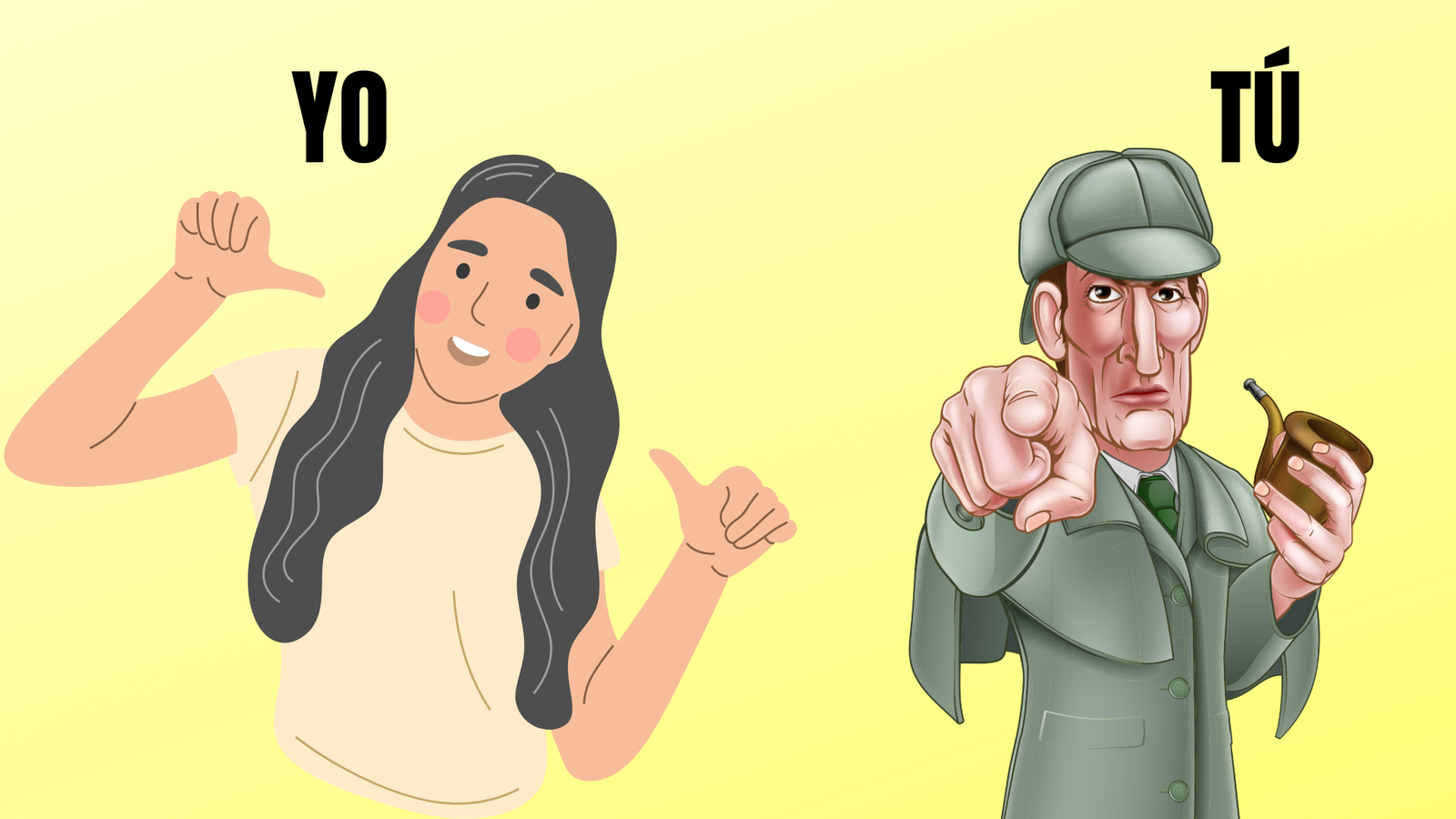
Personal pronouns in Spanish work just like in English — they replace nouns to avoid repetition. The good news? Spanish pronouns follow clear, consistent rules that are easy to learn. In this guide you’ll learn all Spanish personal pronouns, when to use tú vs usted, the key difference between vosotros (Spain) and ustedes (Latin America), and how to practice them in real conversations. ¡Vamos!
👤 What Are Personal Pronouns in Spanish?
Personal pronouns are words that replace the name of a person or thing. Instead of repeating a name over and over, you use a pronoun:
| Alexander is a good student. → He is a good student. |
| The girls are in class. → They are in class. |
In Spanish it works exactly the same way — and unlike verbs (which must be conjugated), pronouns themselves are simple to learn as a fixed list.
📋 Complete Spanish Personal Pronouns Table
| Person | Singular | English | Plural | English |
|---|---|---|---|---|
| 1st | Yo | I | Nosotros / Nosotras | We |
| 2nd (informal) | Tú / Vos | You | Vosotros / Vosotras | You all (Spain only) |
| 2nd (formal) | Usted | You (formal) | Ustedes | You all (Latin America) |
| 3rd (masc.) | Él | He | Ellos | They (masc. or mixed) |
| 3rd (fem.) | Ella | She | Ellas | They (all feminine) |
💡 Can You Omit Pronouns in Spanish?
Yes! Spanish is a pro-drop language — you can often leave out the subject pronoun because the verb ending already tells you who is speaking. In fact, using the pronoun too much sounds unnatural:
| ❌ Sounds unnatural: Yo hablo, yo como, yo vivo |
| ✅ Natural: Hablo español. Como a la una. Vivo en Colombia. |
| Use the pronoun for emphasis or contrast: Yo no lo sé, pero él sí. (I don’t know, but HE does.) |
🆚 Tú vs Usted — When to Use Each
This is one of the most important distinctions for English speakers — English has only “you,” but Spanish has two:
| Pronoun | Use | Example |
|---|---|---|
| Tú | Informal — friends, family, children, people your own age | ¿Cómo estás tú? |
| Usted | Formal — strangers, older people, bosses, customers | ¿Cómo está usted? |
💡 When in doubt, use usted. It’s always safer and more respectful, especially when visiting Latin American countries for the first time.
🌎 Vosotros vs Ustedes — Spain vs Latin America
This is the biggest regional difference in Spanish pronouns:
| Pronoun | Where used | Meaning |
|---|---|---|
| Vosotros / Vosotras | Spain only | You all (informal) |
| Ustedes | All of Latin America | You all (formal AND informal) |
In Latin America, ustedes covers both formal and informal plural situations. Vosotros is only used in Spain — if you’re learning Latin American Spanish, you mainly need to recognize vosotros rather than actively use it.
🇦🇷 The Pronoun “Vos” — Latin American Spanish
In Argentina, Uruguay, Paraguay and parts of Central America, vos is used instead of tú. It has its own verb forms:
| Tú hablas → Vos hablás |
| Tú eres → Vos sos |
| Tú tienes → Vos tenés |
If you’re learning Latin American Spanish, it’s important to recognize vos even if you don’t use it yourself — it’s everywhere in Argentine media and music.
📝 Pronouns in Action — Examples
| Yo soy estudiante. | I am a student. |
| Tú eres mi amigo. | You are my friend. |
| Él es el profesor. | He is the teacher. |
| Ella habla español muy bien. | She speaks Spanish very well. |
| Nosotros vamos al cine. | We are going to the movies. |
| ¿Usted habla inglés? | Do you speak English? (formal) |
| Ellos son los estudiantes. | They are the students. |
| Ustedes son de México. | You all are from Mexico. |
💬 Real Conversation Example
📍 First meeting — tú vs usted
Tom: Buenas tardes, ¿usted es la profesora García?
Good afternoon, are you Professor García? (formal — she’s older and in authority)
Profesora: Sí, soy yo. ¿Y tú eres el nuevo estudiante?
Yes, that’s me. And you’re the new student? (informal — she speaks down to a student)
Tom: Sí, me llamo Tom. Ellos son mis compañeros, Carlos y Ana.
Yes, my name is Tom. They are my classmates, Carlos and Ana.
Profesora: Bienvenidos. Nosotros empezamos la clase en cinco minutos.
Welcome. We start class in five minutes.
Notice the natural switch between usted (Tom → teacher) and tú (teacher → student). This social dynamic is one of the things a native tutor on Italki can help you feel intuitively — when to be formal or informal with different types of people in different Spanish-speaking countries.
⚠️ Common Mistakes English Speakers Make
❌ Using the wrong gender for pronouns
Los libros → ellos (masculine — not ellas!). Las sillas → ellas. Gender of the noun determines the pronoun.
❌ Overusing the pronoun
Yo hablo, yo como, yo vivo sounds very unnatural — like someone learning to read. Let the verb endings do the work: just say hablo, como, vivo.
❌ Using tú in formal situations
Always use usted with strangers, older people, and in professional contexts — especially in Colombia, where people are very attentive to this distinction.
🎮 Let’s Practice!
Test your knowledge of Spanish personal pronouns:
❓ Frequently Asked Questions
Why does Spanish have two words for “you”?
Spanish preserves a distinction that English lost — the formal/informal second person. This lets speakers signal respect and social distance (usted) or familiarity and closeness (tú). The choice matters significantly in Latin American culture, where showing proper respect through usted is highly valued.
Is “nosotras” different from “nosotros”?
Nosotros is used for a group that includes at least one male (or mixed gender). Nosotras is used for an all-female group. In practice, nosotros is the default form you’ll encounter most. The same distinction applies to ellos vs ellas.
What’s the best way to get comfortable with tú vs usted?
Real-life practice with different types of people is the only way to truly internalize this distinction. A native tutor on LingoPie from a Spanish-speaking country will naturally model the appropriate pronoun for different situations, and you’ll absorb the social rules through watching shows and hearing real conversations in context.